Cracking the Code: How Medway NHS Foundation Trust Revolutionised Patient Flow with TeleTracking
In the fast-paced world of acute healthcare, every minute counts. Hospitals across the NHS have long struggled with bed pressures, inefficient discharge processes, and rising emergency demand. But at Medway NHS Foundation Trust, things look very different today. Thanks to a smart approach to patient flow and a game-changing operational system, Medway has cracked the code to smoother operations and safer care. Jo Saunders, Head of Site Management, Medway NHS Foundation Trust and Dan Wadsworth, Director of Strategic Accounts, TeleTracking UK, shared more in a recent “lunch and learn” with Proud2bOps.
From Chaos to Coordination
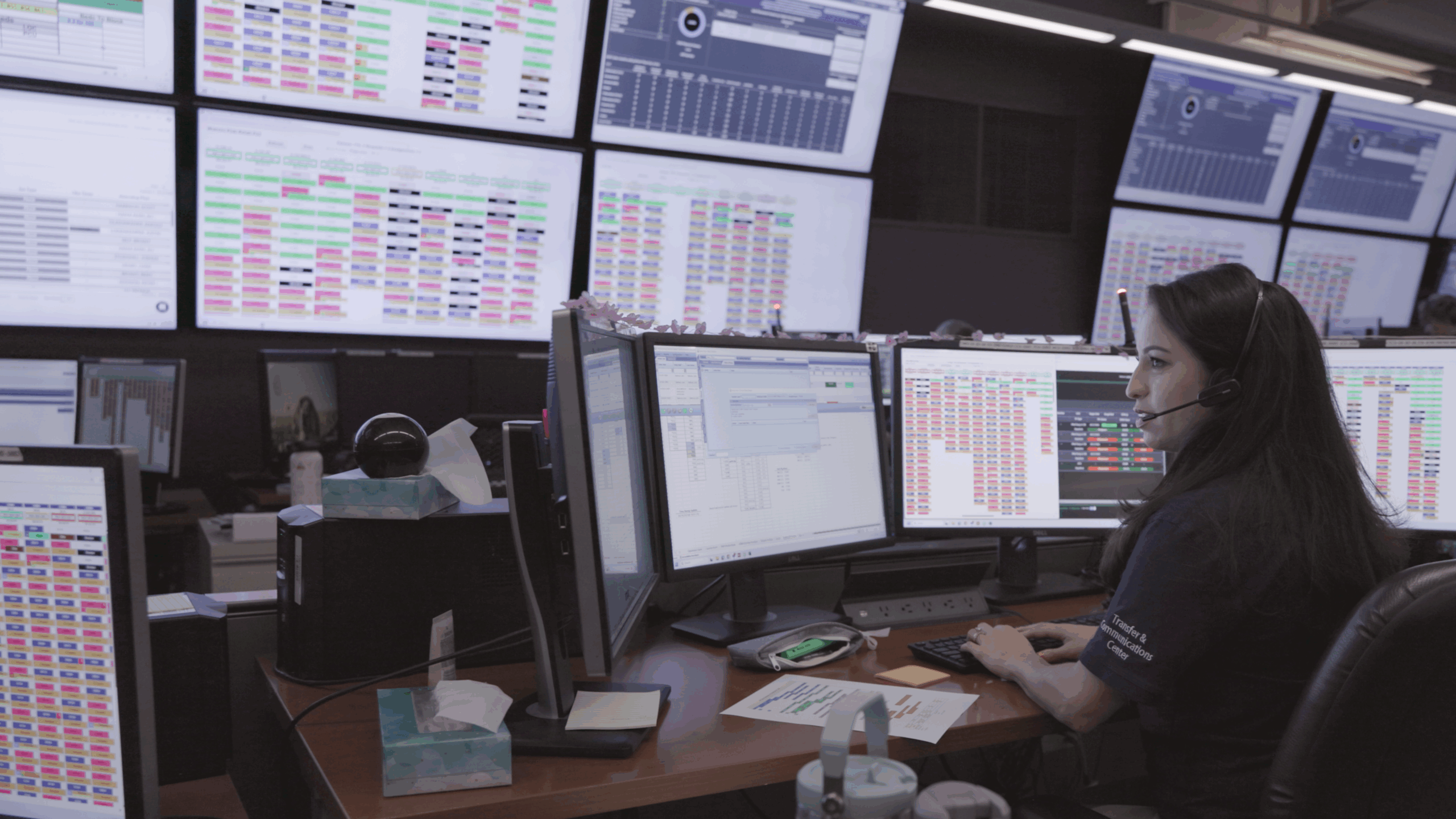
Just two years ago, Medway’s site management team were manually chasing updates across wards with clipboards. “We thought we had good visibility,” said one senior leader, “but we were essentially running the hospital blind.” That changed with the creation of a Care Coordination Centre (CCC)—essentially a command hub staffed 24/7 with a site manager, bed allocation specialists, portering and cleaning coordinators, and emergency planning teams. The room is laid out for constant communication, with digital screens displaying live KPIs and tracking every patient move.
The CCC runs on data provided by TeleTracking’s “IQ” integrated operations platform, which has turned reactive, paper-based bed management into a data-driven, real-time engine for flow. It allows the hospital to see bed availability, portering jobs, and discharge activity at a glance—and act on it instantly.
This operational shift isn’t just about technology—it’s about process and people. The centre’s layout encourages fast communication: the site manager can speak directly to portering or cleaning staff without delays. “We’ve removed idle bed time,” says the team. “We’re not creating more beds—we’re using the ones we have better.”
KPIs That Drive Action
TeleTracking delivers real-time data on every step of the patient journey. Key Performance Indicators (KPIs) include:
- Time to assign a porter after a job is requested
- Time to clean a bed
- Total bed turnaround time
- Time between a patient being declared ready to move and arriving in the new bed
Where it once took more than two hours to turn around a bed, the team now averages just over an hour. Portering tasks that used to take over 30 minutes are now often completed in under 15. The data doesn’t just improve operations—it builds confidence. Teams know when they’re hitting their targets, and when they need to adapt.
Results That Matter
The impact has been transformational:
- Ambulance handovers now average just 13 minutes, a dramatic reduction from previous delays.
- ED four-hour target performance is up to 80%, with fewer breaches and shorter stays.
- Elective activity has been protected, even in winter
- Fewer escalation beds are used, because existing capacity is used more efficiently.
One simple but powerful discovery: at peak times like 4pm, the problem wasn’t a shortage of doctors—it was a delay in moving patients. Adding a porter instead of a doctor created space faster and improved ED flow.
The Dropbox Effect and Discharge Lounge Revival
New workflows like the “dropbox discharge” mean that as soon as a patient’s badge is placed in the discharge box, cleaners are automatically dispatched—no phone calls needed. It’s a small change with huge ripple effects.
And then there’s the discharge lounge. Once a winter escalation space, it was unusable for its original purpose. Today, it’s protected space, staffed and run by the site team, and receives at least 10 patients before 10am every day. That alone has freed up critical space in ED and improved early morning flow.
Looking Ahead
Medway’s success didn’t come from adding more staff or more beds—but from better visibility, better decisions, and better use of the resources they already had. TeleTracking has given the team the tools to lead with data, and the results speak for themselves.
As pressures on the NHS continue to grow, Medway’s experience offers a hopeful, practical lesson: real-time data and empowered teams can transform flow—and transform care.