Driving Disruption: Chris Johnson Of TeleTracking Technologies On The Innovative Approaches They Are Taking To Disrupt Their Industry
This article originally appeared in Authority Magazine
In an age where industries evolve at lightning speed, there exists a special breed of C-suite executives who are not just navigating the changes but driving them. These are the pioneers who think outside the box, championing novel strategies that shatter the status quo and set new industry standards. Their approach fosters innovation, spurs growth, and leads to disruptive change that redefines their sectors. In this interview series, we are talking to disruptive C-suite executives to share their experiences, insights, and the secrets behind the innovative approaches they are taking to disrupt their industries. As part of this series, we had the pleasure of interviewing Chris Johnson.
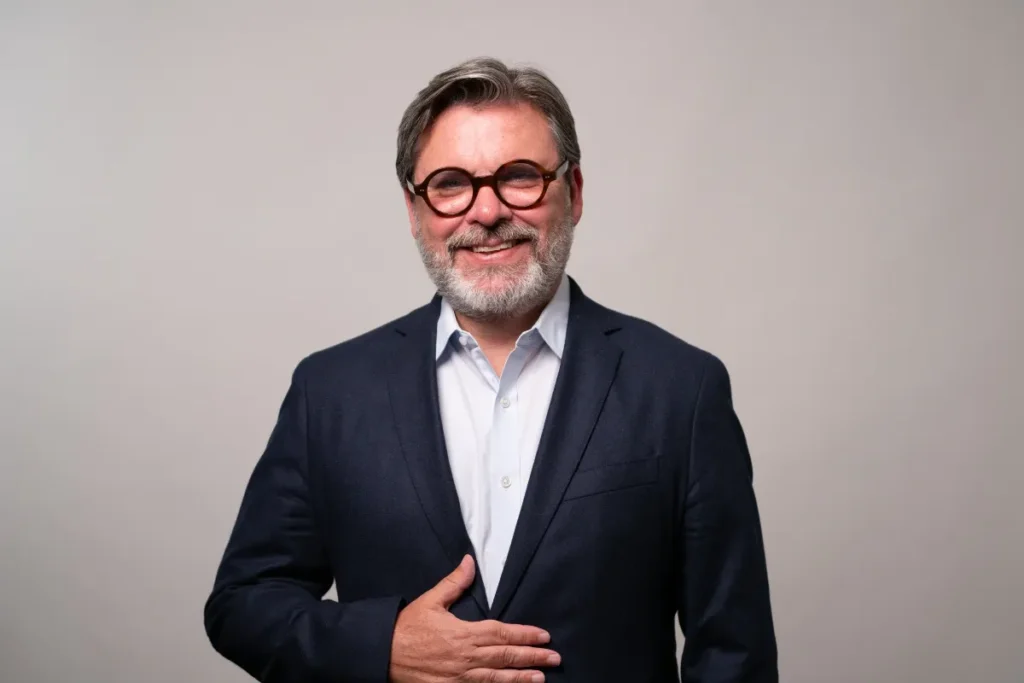
Chris Johnson is the Co-CEO of TeleTracking Technologies, bringing extensive experience in business strategy, technology leadership, and operations management. Under his guidance, TeleTracking has partnered with hospitals and health systems across four countries to drive operational efficiency, support sustainable growth, and enhance the safety of both patients and caregivers. Notably, during the COVID-19 pandemic, Chris led TeleTracking’s collaboration with the U.S. Department of Health and Human Services (HHS) to support national hospital reporting and resource coordination efforts.
Prior to joining TeleTracking, Chris served as a Chief Technology Officer at GE Healthcare, where he led the asset management, patient flow, and hospital operations management platforms. In this role, he built and led a global team of technology professionals and oversaw the development and deployment of a cloud-based platform that supports hospital operations worldwide.
Chris holds an MBA from the Darden School of Business at the University of Virginia and a Bachelor’s Degree in Government from George Mason University.
Thank you so much for joining us in this interview series. Before we dive into our discussion about disruption, our readers would love to “get to know you” a bit better. Can you share with us the backstory about what brought you to your specific career path?
There’s an interesting story about how I ended up at TeleTracking. While at GE, I met with the owner of TeleTracking, Michael Zamagias, and tried to acquire the business for GE. However, after spending time with Michael, I realized two things. First, he had absolutely no interest in selling, and secondly, I started to understand why. The vision that Michael had for TeleTracking in healthcare operations — and still has — is phenomenal. For him it’s not about the money but about the mission of building something that can transform the way we deliver healthcare in this country. So, within the year, I moved to Pittsburgh, where TeleTracking is headquartered, and never looked back. I joined TeleTracking as the Chief of Staff, then Chief Technology Officer, and now Co-CEO, helming the company as we approach our fourth decade of business.
What do you think makes your company stand out? Can you share a story?
We help healthcare organizations expand their capacity to care. It’s more than a tagline — it’s our mission, and it centers on what matters most: the patients.
I’ll never forget when my father had a serious fall while he was traveling. At the ER, we waited for hours with no clear sense of when he’d get a room. I asked a nurse for an update, and she said, “This isn’t like a restaurant where we can tell you when your table will be ready.” That moment stuck with me — because if that hospital had been using our solution, they would have known.
At TeleTracking, we provide hospitals and health systems with real-time visibility into capacity, transfers, and demand — across every facility and beyond; it’s what we call Boundaryless Healthcare. Helping to connect disconnected care settings and turning uncertainty into clarity. No one else combines clinical insight, data, and tech to do this at scale. That’s how we make a difference — so no patient or family member has to wait in the dark.
You are a successful business leader. Which three character traits do you think were most instrumental to your success? Can you please share a story or example for each?
Curiosity, perseverance, and compassion are the three that come to mind. I am, by nature, a very curious person and I use that as a tool to keep our teams always asking ‘what if’ — what if we could capture capacity and patient data from every hospital facility in the country during the COVID-19 pandemic? What if we could sell and implement TeleTracking across the single largest private health system in the country? What if we could take a small to medium-sized company in Pittsburgh, PA and expand it to offices in two European countries and beyond? It’s the original curiosity of ‘if we could do it’ that made all of those a reality in my time at TeleTracking. Those weren’t easy but tie directly into the second trait of persevering through the challenges and overcoming roadblocks.
Healthcare is not an industry with an exponential growth trajectory. This is an industry that is challenged from a capital standpoint, and we’ve been forced to overcome a shifting market that, quite honestly, can and has forced us to pivot multiple times and reinvent ourselves from a technology standpoint up to, and including, how we go to market. We’ve been successful each time and are amid yet another complete reinvention of ourselves through an industry defining partnership to bring our domain experience together with Palantir’s technology platforms to develop the next generation of healthcare operations solutions.
Finally, compassion. Starting my career in financial services, the open joke was that ‘we’re not doing God’s work here,’ which is quite true. But coming to TeleTracking, I understand the importance of the work we do because it has a direct impact on our employees, our friends, and our families. We don’t deliver care, but we make it possible for our customers to do so by creating capacity for patients to access care, helping them through the workflow of care delivery, and ultimately moving patients throughout their care journey. It’s a business and there are financial implications behind it, but at the end of the day, our team understands that the work we do impacts the lives of millions of people around the world. That’s powerful to me and something I take along to every meeting and every conversation I have about TeleTracking.
Leadership often entails making difficult decisions or hard choices between two apparently good paths. Can you share a story with us about a hard decision or choice you had to make as a leader? I’m curious to understand how these challenges have shaped your leadership.
In March of 2020, we made the decision to put the needs of the nation first, pausing our work and shifting the resources of the company to develop the HHS Protect Platform during COVID-19. It was a time when so many people in the industry were making the decision to retreat; a lot of people were laid off, a lot of people were put on furlough because quite honestly, not a lot of business was being conducted. We chose to fight forward, having no layoffs or furloughs, and threw our full efforts behind what was needed to create the national visibility solution that, in the end, was touted by multiple administrations as saving hundreds of thousands of lives by providing the data and infrastructure to allocate beds, resources, and vaccines on a scale never before possible.
It was a risk to do this, but we did it and it’s proven to be not only one of the greatest achievements TeleTracking has had, but personally I think one of the most gratifying parts of my career.
Ok, thank you for that. Let’s now jump to the primary focus of our interview. Let’s begin with a basic definition so that all of us are on the same page. In the context of a business, what exactly is “Disruption”?
Whether internal or external, we live in a world of constant disruption; if you’re not disrupting, you will be disrupted. To me, disruption is about game-changing innovation — something so transformative it forces an industry to rethink how it operates. It’s not just new technology; it’s a shift in mindset, a challenge to the status quo.
At TeleTracking, we’ve been disrupting healthcare operations for over 30 years. We replaced magnetic bed boards with real-time digital systems, pioneered inter-hospital transfer coordination, and during the pandemic, we did the unthinkable: tracked and reported hospital capacity across the entire country. Now, with our partnership with Palantir, we’re once again redefining the space — combining the most advanced AI platform with the gold standard in hospital operations.
That’s what real disruption looks like: meaningful, measurable change at scale.
How do you perceive the role of ‘disruption’ within your industry, and how have you personally embraced it? Is it a necessity, a strategy, or something else entirely in your view?
This is something you face every day in the world of healthcare. Healthcare is a very vertical-driven industry and that has made it reluctant to change in some regard. Most disruption is slow moving and historically driven by the EMR. I believe there is so much that can be done, and quite honestly, must be done to help whittle down the climbing trendline of costs. It will require a fundamental shift in how we think about healthcare in this country.
I’m not looking to disrupt clinical protocols in any way, but I do look to fundamentally change the way hospitals think about and manage the friction between ancillary services and, at a more macro level, better manage how patients, staff, and assets move throughout the system. It’s not about simply integrating technology to support this; the disruption happens when we envision outcomes first, have an outcomes-driven strategy to address the problems, and only then, implement solutions to make it a reality.
What lessons have you learned from challenging conventional wisdom, and how have those lessons shaped your leadership style?
The conventional wisdom about small companies has always been that growth to a point is possible, but to go beyond that, outside investment has always been necessary to scale. We have challenged that way of thinking for over 30 years, showing that a small, focused, mission-driven organization can outperform large, multi-national companies when they are best of breed. TeleTracking has always had a David vs Goliath mentality when it comes to the scope of the problems we choose to take on and solve.
I think the fact that we have stayed focused on our same mission for the entire history of the company and kept our private structure is a testament to our owner, Michael Zamagias’ belief that the mission is more important than the money. What’s more unconventional than that in today’s society?
Disruptive ideas often meet resistance. Could you describe a time when you faced significant pushback for a disruptive idea? How did you navigate the opposition, and what advice would you give to others in a similar situation?
During a time in TeleTracking’s history when we were not only managing a project with the federal government, but also embarking on one of the largest healthcare IT implementations ever attempted, I and the rest of the leadership made the decision to further disrupt our team’s bandwidth and set our sights on the German market. We did this because we realized the problems we face here in the United States when it comes to access to healthcare are not unique to us; they are the same challenges that people face across the globe. We studied the market and had a good sense of what it would take to be successful, but there are still risks in any market expansion.
What I took away from this expansion is that sometimes there has to be a case of it being your ‘first rodeo’ and while that’s not always a comfortable scenario for those involved, it’s a necessary step to disrupt the norm and grow for the future. You must ask ‘is the decision aligned with the mission and vision of the company?’ and ‘do you have faith in the team managing it?’ If the answers to those are both yes, then my advice is that it’s worth a shot.
What are your “Five Innovative Approaches We Are Using To Disrupt Our Industry”?
- Turning Bed Boards into Command Centers
We pioneered the move from manual bed boards to real-time, digital capacity management. That may sound simple today, but it was revolutionary in the ’90s — and it’s still foundational. I recall visiting a hospital early on, where a nurse had used magnets and Post-it notes to manage 600 beds. We replaced that with a centralized Command Center that gave her hours back in her day — and gave the hospital an entirely new level of operational control. - Creating the First Scalable Transfer Center Model
Hospitals used to operate in silos. We introduced a model to coordinate patient movement between facilities, creating regional transfer centers that streamline care delivery across entire health systems. One large system we worked with saw a 30% reduction in patient transfer time — getting people the right care faster and freeing up valuable resources. - Tracking Hospital Capacity During COVID-19 Across the Nation
In 2020, we were asked to do what had never been done before: track hospital capacity across the entire United States. Within weeks, we built a national platform used by over 6,000 hospitals — providing real-time data to the federal government. It wasn’t just innovative, it was lifesaving. That initiative helped allocate ventilators, ICU beds, and staff during the most critical moments of the pandemic. - Integrating AI & Advanced Analytics Through Our Partnership with Palantir
We’re now bringing the power of AI to healthcare operations through our partnership with Palantir. It’s a first-of-its-kind fusion of the leading operational platform in healthcare with one of the most advanced data and AI engines in the world. This means systems can now predict demand, model future staffing needs, and make smarter, faster decisions. It’s not just reactive, it’s proactive operations at scale. - Building System-Wide Situational Awareness
We started within the four walls of a hospital, now, we’re giving entire health systems — and even governments — a single source of truth across all facilities. An example: a multi-state system recently used our platform to coordinate response to a man-made disaster, moving patients preemptively based on real-time capacity data. That’s operational awareness that saves lives.
Looking back at your career, in what ways has being disruptive defined or redefined your path? What surprises have you encountered along the way?
Simply put, I would say it led me to where I am today at TeleTracking. Starting in the financial technology sector, I soon realized that the work I was doing wasn’t fulfilling enough. I eventually found my way to healthcare through a series of job changes and acquisitions, but soon realized that if I wanted to make a true impact, truly disrupt an industry, healthcare was the right place to do it. The problems we’re solving, on a macro level, stand to not only disrupt the industry, but have an immediate impact on our friends and family. That’s why I chose to move into and stay in healthcare.
Beyond professional accomplishments, how has embracing disruption affected you on a personal level?
At the beginning of my career, I was really interested in technology and back then you didn’t have to have a Computer Science degree, so I pivoted from my path of becoming a lawyer and moved into the world of Financial Services. At the time, I was really fascinated by the fast-growing World Wide Web and went to our COO at the time and said if/when we have an internet strategy that I would like to be part of it. As luck would have it, that time was now and I was immediately thrust into a new role that hadn’t existed within our company.
From that point on, and even today, I’ve been driven to disrupt the norm and look outside the conventional career path. In fact, there hasn’t been a point in my career that I have taken a job with a defined job description. I’ve always looked to disrupt the norm and focus on creating a path for myself.
In your role as a C-suite leader, driving innovation and embracing disruption, what thoughts or concerns keep you awake at night? How do these reflections guide your decisions and leadership?
It’s not what we do or don’t do that keeps me up at night; what keeps me up at night is excitement- it’s not angst, it’s anticipation. I’m genuinely excited about the opportunities we have to reinvent how hospitals and health systems operate. Figuratively speaking, I often lay awake thinking about the people that have seized their opportunity to make an impact, to drive real change in their field. I’ve always liked the saying ‘developing a strategy is not a roadmap, it’s a compass.’ There are a lot of people that can see the stars, but there are very few that can identify the constellations. As a leader, I’ve always felt it’s those people that can identify the constellations who are successful; they’re the ones looking at the same problems as everyone else, but seeing different, innovative solutions. They’re the ones disrupting the norm.
You are a person of great influence. If you could start a movement that would bring the most amount of good to the most amount of people, what would that be? You never know what your idea can trigger. 🙂
Thank you. I am all in on what TeleTracking is doing for hospitals and health systems — and importantly the patients and staff. The movement we created back in 1991 was based on an idea that is continuing to evolve, challenge the status quo, and deliver meaningful outcomes. I believe that TeleTracking is a movement that is continuing to bring new ideas to the industry and is at the forefront of reimagining healthcare operations.
How can our readers further follow your work online?
Personally, I am very active on LinkedIn where I regularly share my thoughts on the industry and you can find TeleTracking at https://www.linkedin.com/company/teletracking/ or at www.teletracking.com to see what were up to as a business.
Thank you for the time you spent sharing these fantastic insights. We wish you only continued success in your great work!
About the Interviewer: Cynthia Corsetti is an esteemed executive coach with over two decades in corporate leadership and 11 years in executive coaching. Author of the upcoming book, “Dark Drivers,” she guides high-performing professionals and Fortune 500 firms to recognize and manage underlying influences affecting their leadership. Beyond individual coaching, Cynthia offers a 6-month executive transition program and partners with organizations to nurture the next wave of leadership excellence.